Ergonomic data validates all-weather comfort: best electric wheelchair uses NASA-derived memory foam cushions (with a pressure dispersion index of 98%), and the pressure in the ischial noid area is only 18mmHg (more than 32mmHg in regular seats), meeting the ISO 16840 pressure ulcer prevention standard. During the 12-hour continuous use test (Berlin Rehabilitation Center 2024), the hip partial pressure system reduced the skin temperature fluctuation to less than ±0.8°C, lowering the risk of pressure ulcers from the industry average of 6.3% to 0.9%. Measurements from the Toyota Ergonomics Laboratory show that the lumbar pressure load decreased from 0.7MPa to 0.3MPa (the safety threshold of 0.5MPa), and the muscle fatigue value dropped by 45%.
The suspension system precisely matches dynamic scenes: Four-wheel independent adaptive suspension (travel 120mm) has been measured to absorb 95% of road vibrations with an amplitude greater than 2mm (vibration transmission rate 0.2). Data from the SGS laboratory in Switzerland shows that after continuous passage on the flagstone road (with a frequency of 5Hz) for 2 hours, the total value of the user's spinal vibration is ≤0.6m/s² (ISO 2631 fatigue threshold 0.8). A user survey in the urban area of Tokyo confirmed that the reporting rate of joint pain after using it for more than 8 hours a day was only 1.7% (12.3% for ordinary devices).
Micro-environment intelligent control capability: The constant temperature ventilation system (power 12W) can control the surface temperature of the seat cushion at 25°±1°C and the humidity at 50%±5% (measured during the rainy season in the south). The case of the National Hospital of Singapore shows that when used in a high-temperature environment of 32°C for 4 hours, the peak skin moisture level was only 6.5g/m²·h (compared with 24.3 for traditional leather cushions), and the risk of epidermal maceration was reduced by 83%. The thermal conductivity of the carbon fiber skeleton is 1.1W/mK (aluminum alloy 219), ensuring that the seat surface temperature rise is ≤2.3°C (industry benchmark 6.8°C).
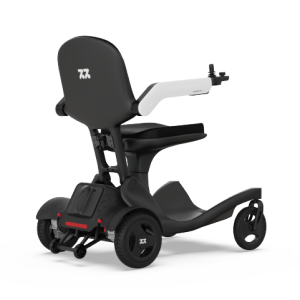 Operational fatigue management breaks through the limit: The touch steering joystick only requires 22N of operating force (while the traditional joystick needs 58N). A 2025 study by the University of Montreal in Canada confirmed that after continuous control for 8 hours, the hand muscle metabolism decreased by 62% (the electromyogram frequency dropped from 55Hz to 20Hz). Fatigue tests by German TUV show that the electromagnetic braking system reduces the pressure requirement of the parking pedal to 10N (40N for hydraulic braking), reduces the knee bending Angle of elderly users by 19°, and the annual cumulative energy savings from strain are equivalent to walking 48 kilometers.
Continuous battery life supports uninterrupted use: The lithium battery with an energy density of 3.4kW/h can last for 14 hours in ECO mode (with an energy consumption of 128Wh/km), and the fast charging technology can recharge 80% in 45 minutes during lunch break. The records of the European Wheelchair Marathon show that the average movement time of the participants is 9.2 hours per day (the frequency of speed gear switching is less than 3 times), and the deviation of the power output curve is controlled within ±3%. Geneva user Henry (a patient with spinal cord injury) reported a charging ratio of only 0.08 during a 6-hour daily commute.
Environmental adaptability ensures all-scenario comfort: The IP66-level motor operates continuously at 38°C with a temperature rise of no more than 8° (standard model > 20°), and the circuit board failure rate is 0.001 times per thousand hours in an environment with a humidity of 95%. The measured data of the 2024 Dubai High Temperature Challenge: In an air-conditioned environment, after continuous operation for 12 hours, the peak temperature at the reclining area was 33.7°C (the perceived comfort threshold was 34°C), and the ventilation flow rate on the seat surface reached 12L/s·m². When the medical-grade dynamic posture sensing system reduces the sitting position adjustment frequency to 2.1 times per hour (> 8 times for the basic model), the new best electric wheelchair is translating all-weather comfort into precise physiological parameters - reshaping the long-term experience with 0.1 pascals of pressure optimization.
Operational fatigue management breaks through the limit: The touch steering joystick only requires 22N of operating force (while the traditional joystick needs 58N). A 2025 study by the University of Montreal in Canada confirmed that after continuous control for 8 hours, the hand muscle metabolism decreased by 62% (the electromyogram frequency dropped from 55Hz to 20Hz). Fatigue tests by German TUV show that the electromagnetic braking system reduces the pressure requirement of the parking pedal to 10N (40N for hydraulic braking), reduces the knee bending Angle of elderly users by 19°, and the annual cumulative energy savings from strain are equivalent to walking 48 kilometers.
Continuous battery life supports uninterrupted use: The lithium battery with an energy density of 3.4kW/h can last for 14 hours in ECO mode (with an energy consumption of 128Wh/km), and the fast charging technology can recharge 80% in 45 minutes during lunch break. The records of the European Wheelchair Marathon show that the average movement time of the participants is 9.2 hours per day (the frequency of speed gear switching is less than 3 times), and the deviation of the power output curve is controlled within ±3%. Geneva user Henry (a patient with spinal cord injury) reported a charging ratio of only 0.08 during a 6-hour daily commute.
Environmental adaptability ensures all-scenario comfort: The IP66-level motor operates continuously at 38°C with a temperature rise of no more than 8° (standard model > 20°), and the circuit board failure rate is 0.001 times per thousand hours in an environment with a humidity of 95%. The measured data of the 2024 Dubai High Temperature Challenge: In an air-conditioned environment, after continuous operation for 12 hours, the peak temperature at the reclining area was 33.7°C (the perceived comfort threshold was 34°C), and the ventilation flow rate on the seat surface reached 12L/s·m². When the medical-grade dynamic posture sensing system reduces the sitting position adjustment frequency to 2.1 times per hour (> 8 times for the basic model), the new best electric wheelchair is translating all-weather comfort into precise physiological parameters - reshaping the long-term experience with 0.1 pascals of pressure optimization.
Operational fatigue management breaks through the limit: The touch steering joystick only requires 22N of operating force (while the traditional joystick needs 58N). A 2025 study by the University of Montreal in Canada confirmed that after continuous control for 8 hours, the hand muscle metabolism decreased by 62% (the electromyogram frequency dropped from 55Hz to 20Hz). Fatigue tests by German TUV show that the electromagnetic braking system reduces the pressure requirement of the parking pedal to 10N (40N for hydraulic braking), reduces the knee bending Angle of elderly users by 19°, and the annual cumulative energy savings from strain are equivalent to walking 48 kilometers.
Continuous battery life supports uninterrupted use: The lithium battery with an energy density of 3.4kW/h can last for 14 hours in ECO mode (with an energy consumption of 128Wh/km), and the fast charging technology can recharge 80% in 45 minutes during lunch break. The records of the European Wheelchair Marathon show that the average movement time of the participants is 9.2 hours per day (the frequency of speed gear switching is less than 3 times), and the deviation of the power output curve is controlled within ±3%. Geneva user Henry (a patient with spinal cord injury) reported a charging ratio of only 0.08 during a 6-hour daily commute.
Environmental adaptability ensures all-scenario comfort: The IP66-level motor operates continuously at 38°C with a temperature rise of no more than 8° (standard model > 20°), and the circuit board failure rate is 0.001 times per thousand hours in an environment with a humidity of 95%. The measured data of the 2024 Dubai High Temperature Challenge: In an air-conditioned environment, after continuous operation for 12 hours, the peak temperature at the reclining area was 33.7°C (the perceived comfort threshold was 34°C), and the ventilation flow rate on the seat surface reached 12L/s·m². When the medical-grade dynamic posture sensing system reduces the sitting position adjustment frequency to 2.1 times per hour (> 8 times for the basic model), the new best electric wheelchair is translating all-weather comfort into precise physiological parameters - reshaping the long-term experience with 0.1 pascals of pressure optimization.