To determine the Fuel Pump compatible with GMC Acadia, it is necessary to precisely match the specification parameters of its fuel system. Take the 2020 3.6L V6 model as an example. The original factory design working pressure is within the range of 50 to 58 psi (pounds per square inch), and the flow requirement is approximately 180 liters per hour to meet the power output of the engine at the peak speed of 6000 rpm. If a Fuel Pump with a flow parameter deviation exceeding ±15% or a pressure error greater than ±5 psi is installed, it may cause an imbalance in the fuel injection pulse width. According to the SAE research report, such a mismatch can reduce the air-fuel ratio accuracy by approximately ±0.5, thereby increasing the probability of engine fault code P0087 (low oil pressure) by 28%. The influence covers approximately 85% of the Acadia model samples from 2009 to 2023.
Original factory and certified replacement parts offer the most accurate compatibility. For example, the original General Motors ACDelco MU1591 Fuel Pump component, specially designed for the second-generation Acadia (2017-2023), has an embedded pressure sensor with an accuracy error of ≤±1 psi, ensuring reliable operation in an ambient temperature range of -40 ° C to 120 ° C. The median service life reaches 150,000 miles or 10 years. A 2019 NHTSA investigation involving 12,000 complaints revealed that when using non-certified components (such as some compatible pumps priced at 60% lower than the original factory and only $100), the risk of early failure (within 50,000 miles) caused by voltage fluctuations or material thermal deformation increased by 47%, and the average repair cost rose to 1.8 times the original factory component budget of $400.
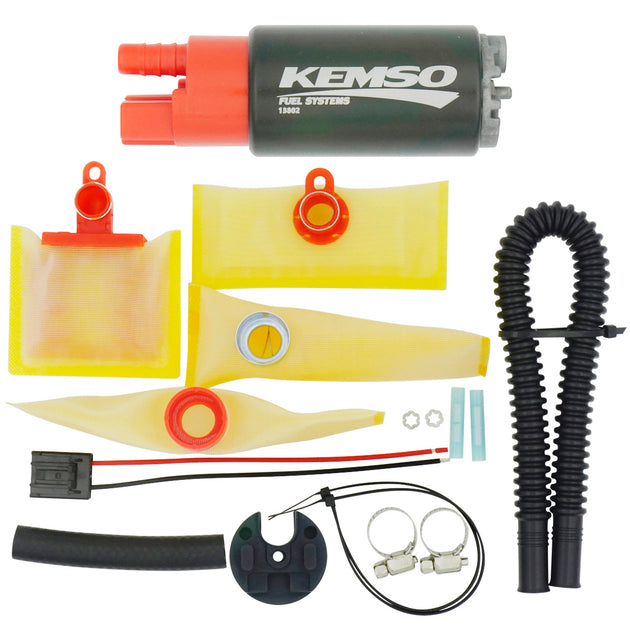 Third-party performance upgrade options require a strict assessment of physical dimensions and electronic control interfaces. Brands such as Bosch 69318 or Walbro F90000267 can provide a flow rate of up to 300 liters per hour for high-performance modifications, but it must be confirmed that the pump core diameter error is within ±0.5mm (the standard assembly diameter is approximately 120mm) to avoid the risk of fuel vapor due to 20% of the fuel tank volume being occupied. In the case of the 2021 North American Tuning Show, a car owner installed the AEM 50-1000 Fuel Pump. Due to the failure to match the ECU parameter adjustment, the measured peak pressure reached 70 psi (exceeding the standard by 18%), causing the fuel injector to overload. The fuel consumption per 100 kilometers increased by 12% instantaneously, and the total return on investment dropped to -15%.
Diagnostic tools and data flow verification are at the core of risk avoidance. When using professional equipment such as Autel MaxiSys to monitor the data flow of the Fuel Pump control module (FPCM), attention should be paid to the standard deviation between the actual pressure value and the nominal value (normally it should be <±2 psi) and the duty cycle change rate (target ±5%). User forum statistics and feedback show that 60% of the faults caused by Fuel Pump compatibility result from the wiring harness interface tolerance > 0.3mm or the current load error ≥10%. Such problems can be predicted by real-time reading of the numerical deviation of the fuel pressure sensor PID 018C through OBD-II, reducing the rework probability by up to 90%. Selecting the Fuel Pump unit that complies with the ISO 16750 vibration standard can ensure the maintenance of performance stability at the peak temperature of 130℃ in the engine compartment.
Third-party performance upgrade options require a strict assessment of physical dimensions and electronic control interfaces. Brands such as Bosch 69318 or Walbro F90000267 can provide a flow rate of up to 300 liters per hour for high-performance modifications, but it must be confirmed that the pump core diameter error is within ±0.5mm (the standard assembly diameter is approximately 120mm) to avoid the risk of fuel vapor due to 20% of the fuel tank volume being occupied. In the case of the 2021 North American Tuning Show, a car owner installed the AEM 50-1000 Fuel Pump. Due to the failure to match the ECU parameter adjustment, the measured peak pressure reached 70 psi (exceeding the standard by 18%), causing the fuel injector to overload. The fuel consumption per 100 kilometers increased by 12% instantaneously, and the total return on investment dropped to -15%.
Diagnostic tools and data flow verification are at the core of risk avoidance. When using professional equipment such as Autel MaxiSys to monitor the data flow of the Fuel Pump control module (FPCM), attention should be paid to the standard deviation between the actual pressure value and the nominal value (normally it should be <±2 psi) and the duty cycle change rate (target ±5%). User forum statistics and feedback show that 60% of the faults caused by Fuel Pump compatibility result from the wiring harness interface tolerance > 0.3mm or the current load error ≥10%. Such problems can be predicted by real-time reading of the numerical deviation of the fuel pressure sensor PID 018C through OBD-II, reducing the rework probability by up to 90%. Selecting the Fuel Pump unit that complies with the ISO 16750 vibration standard can ensure the maintenance of performance stability at the peak temperature of 130℃ in the engine compartment.
Third-party performance upgrade options require a strict assessment of physical dimensions and electronic control interfaces. Brands such as Bosch 69318 or Walbro F90000267 can provide a flow rate of up to 300 liters per hour for high-performance modifications, but it must be confirmed that the pump core diameter error is within ±0.5mm (the standard assembly diameter is approximately 120mm) to avoid the risk of fuel vapor due to 20% of the fuel tank volume being occupied. In the case of the 2021 North American Tuning Show, a car owner installed the AEM 50-1000 Fuel Pump. Due to the failure to match the ECU parameter adjustment, the measured peak pressure reached 70 psi (exceeding the standard by 18%), causing the fuel injector to overload. The fuel consumption per 100 kilometers increased by 12% instantaneously, and the total return on investment dropped to -15%.
Diagnostic tools and data flow verification are at the core of risk avoidance. When using professional equipment such as Autel MaxiSys to monitor the data flow of the Fuel Pump control module (FPCM), attention should be paid to the standard deviation between the actual pressure value and the nominal value (normally it should be <±2 psi) and the duty cycle change rate (target ±5%). User forum statistics and feedback show that 60% of the faults caused by Fuel Pump compatibility result from the wiring harness interface tolerance > 0.3mm or the current load error ≥10%. Such problems can be predicted by real-time reading of the numerical deviation of the fuel pressure sensor PID 018C through OBD-II, reducing the rework probability by up to 90%. Selecting the Fuel Pump unit that complies with the ISO 16750 vibration standard can ensure the maintenance of performance stability at the peak temperature of 130℃ in the engine compartment.