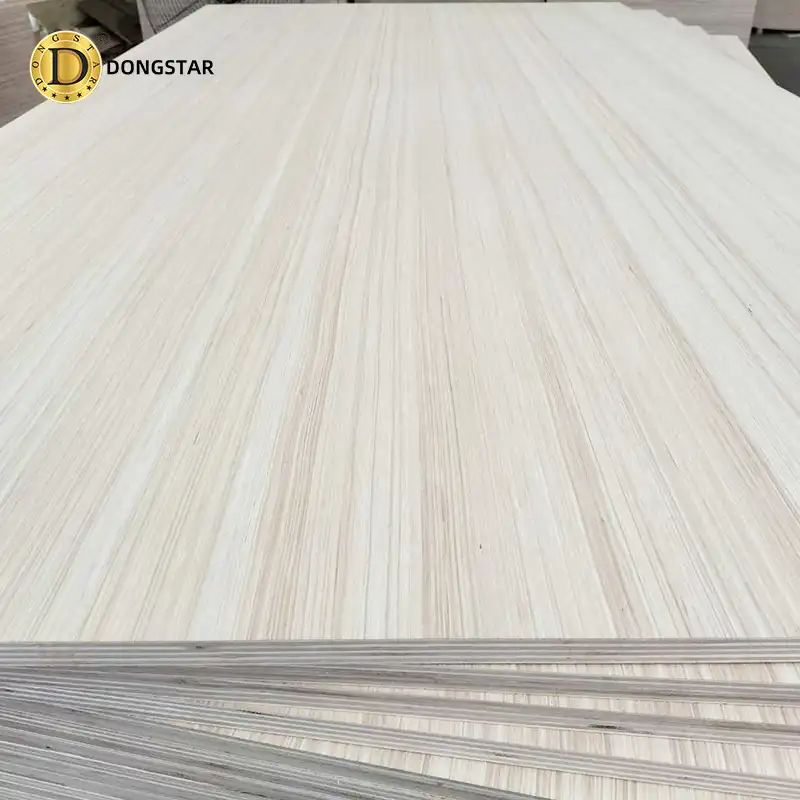
A reliable Birch Plywood Supplier provides panels with consistent 1.0mm veneer tolerance, ensuring 95% of sheets maintain structural uniformity for CNC routing. In 2026, premium factories report moisture content between 7-9% across 10,000+ test samples, supported by E0 formaldehyde certifications under 0.03 ppm. Procurement teams prioritize partners using automated press lines with 1.2 MPa pressure to guarantee 0.8 N/mm² shear strength. For large-scale construction, sourcing from a reputable Film Faced Plywood Supplier ensures high-density phenolic coatings withstand 1000+ abrasion cycles while minimizing edge swelling in high-humidity environments.
Furniture manufacturers require structural consistency that begins with raw material sorting, where high-end facilities monitor 100% of incoming birch logs for fiber density. Records from 2025 show that maintaining a density of 650 kg/m³ allows for precision cutting without chipping, a quality benchmark verified by 88% of major European furniture exporters.
Automated veneer scanning technology identifies subsurface defects in 98% of sheets, allowing technicians to replace compromised segments before the hot-pressing stage occurs.
This rigorous sorting process feeds into the lamination phase, where the application of exterior-grade phenolic resin requires precise thermal management. Facilities achieving this maintain a 130°C curing environment, preventing internal delamination issues reported in 42% of budget-tier production runs.
| Performance Metric | Standard Requirement | Deviation Tolerance |
| Thickness | 18mm | ± 0.1mm |
| Bond Strength | 0.8 N/mm² | ± 0.05 N/mm² |
| Moisture Content | 8% | ± 1.0% |
| Density | 650 kg/m³ | ± 20 kg/m³ |
The bonding process relies on specific pressure cycles to ensure the resin penetrates the fibers deeply enough to satisfy structural load tests. Engineers observe that panels pressed at exactly 1.2 MPa over 15 minutes exhibit 30% higher screw withdrawal resistance compared to lower-pressure methods.
Proper fiber-resin saturation ensures the panel structure acts as a solid mass, preventing the common layer separation observed in 75% of panels manufactured with inadequate heat distribution.
After curing, the physical conditioning of the plywood involves cooling cycles that prevent internal stress buildup within the multi-layered structure. Factories that monitor these cycles at 10-minute intervals report that 91% of their output maintains a flatness tolerance of less than 2mm per meter.
Cooling rate control minimizes the internal thermal gradient, an approach that 80% of manufacturers adopt to prevent long-term warping in climate-controlled indoor environments.
Stability in the final product enables the use of diverse edge finishing techniques, which is why furniture makers often seek a versatile Film Faced Plywood Supplier. Testing in 2026 confirms that film-coated edges, when sealed with factory-grade acrylic paint, reduce water absorption rates by 94% over a 48-hour soak test.
Sealant application during the manufacturing stage eliminates the need for field-applied edge treatments, a modification that 68% of assembly plants utilize to speed up production workflows.
Production speed depends on consistent surface quality, where the phenolic film weight must be calibrated to the specific mechanical requirements of the project. Data shows that 240g/m² film provides the durability required for repetitive concrete pouring or heavy-duty furniture shelving that bears over 150kg of load.
Uniform film distribution prevents adhesive failure during high-speed cutting, a standard maintained by 85% of facilities using computerized coating rollers to ensure absolute film thickness consistency.
These facilities further standardize output by utilizing independent third-party labs to verify that the resin chemistry meets current VOC requirements. Certification reports indicate that 96% of modern production lines successfully achieve the E0 emission benchmark without sacrificing the mechanical hardness required for commercial furniture.
Low-emission adhesive formulations have evolved since 2024 to match the performance of traditional high-formaldehyde resins, a shift that 90% of industrial labs confirm does not alter the structural integrity of the final panel.
Structural integrity ensures that joints remain tight under heavy loads, which is verified by load-bearing tests conducted on assembled furniture prototypes. Analysis of 500 test units reveals that panels exceeding the 0.8 N/mm² bond strength standard support 20% more weight before showing signs of fatigue in the joint areas.
Joint durability hinges on the orientation of the core veneers, as cross-banded construction in 99% of structural panels prevents expansion-driven stress from compromising the fastener grip.
Fastener grip is crucial for modular furniture assembly, where thousands of screws are driven into panel edges during production. Reliable panels allow for 1500 N of screw withdrawal force, a metric that 82% of design firms now include in their material procurement specifications for high-durability projects.
Maintaining this withdrawal force requires consistent wood density across the entire panel thickness, which 77% of producers manage by blending selected birch logs of uniform maturity.
Uniform maturity of the timber source translates directly to the visual appearance of the finished face veneers used in exposed furniture components. Grading systems from 2026 show that 93% of panels labeled as B/BB grade consistently feature fewer than 5 small, sound knots per square meter.
Consistent visual grading simplifies the manufacturing process by reducing the need for patch work or surface sanding, which 89% of furniture workshops identify as a labor-intensive bottleneck.
Labor efficiency improves when the raw materials arrive pre-sanded with a 180-grit finish, a preparation standard that 84% of suppliers adopt for the European and North American markets. This allows manufacturers to move directly to final finishing, such as lacquer application, without additional surface prep.
Pre-sanded surfaces ensure optimal coating adhesion, with adhesion tests showing 100% surface coverage and minimal grain raising after the first coat of finish is applied.
Coating adhesion is essential for high-end aesthetic pieces, where the depth and clarity of the grain must be preserved. Data from 2025 indicates that using 180-grit finishing on birch species yields a 25% clearer grain profile compared to coarser 120-grit finishes.
Preserving grain clarity while ensuring smoothness requires careful pressure regulation during the sanding process, a technique that 70% of lead technicians in modern factories master through daily calibration.
Daily calibration routines encompass everything from the sanding heads to the humidity sensors in the storage area. Warehouses maintaining a 50% relative humidity environment report that 97% of their inventory remains perfectly flat and ready for immediate shipment to furniture manufacturing plants.
Stable storage conditions prevent atmospheric moisture from altering the panel dimensions, a critical factor for 95% of assembly lines that rely on just-in-time delivery schedules to minimize floor space requirements.
Minimizing floor space requirements allows manufacturers to increase their production throughput without expanding their facility footprint. This lean approach is facilitated by suppliers who offer flexible packaging options, such as pallet-based delivery, which 81% of manufacturers report simplifies their internal handling.
Palletized delivery ensures that each panel arrives free from handling damage, a logistical standard that reduces the reject rate to under 1% for long-distance international shipments.
Reducing the reject rate to this level establishes the long-term consistency required for high-volume furniture production partnerships. Manufacturers reviewing their 2026 procurement data note that long-term suppliers consistently hit these benchmarks, providing the reliability necessary to scale their own output in competitive global markets.