The Fuel system of a 450cc off-road motorcycle needs to match the high-speed characteristics, and the flow selection of the Fuel Pump needs to be precisely calculated. When the engine reaches a peak speed of 11,000 RPM, the theoretical fuel consumption is approximately 65L/h. Considering 20% safety redundancy, the ideal fuel pump flow rate should be 78L/h. The mainstream original factory configurations such as the Keihin FP-12C pump have a nominal flow rate of 82L/h (measured at 78.5L/h under 3Bar pressure), fully covering the requirements. If the turbocharged engine (with a power exceeding 55 horsepower) is modified, it needs to be upgraded to a specification above 100L/h. For example, the 105L/h pump body of Walbro GSL392 can support an additional 30% power increase. The 2023 FIM race technical report shows that 89% of the 450cc class racing cars are equipped with fuel pumps in the flow rate range of 80-110L/h.
Vibration tolerance has become a key indicator. Professional tests show that the fuel pump of an off-road motorcycle needs to withstand 20G of continuous vibration during operation (while that of a road motorcycle is only 5G), and the lifespan of a regular car pump is reduced by 80% under such conditions. The top-tier models such as the Mikuni TM40 are equipped with pumps featuring reinforced nylon impellers and stainless steel bushings. They have passed the ISO 20653 dust-proof and water-proof certification and can withstand the 50-hour turbulence at 100km/h in the simulated forest road test. The comparative experiment found that the flow rate attenuation rate of the pump body that failed to meet the IP67 sealing standard reached 22% after working in a sandy and dusty environment for 200 hours, while the attenuation rate of the enhanced model during the same period was only 3%.
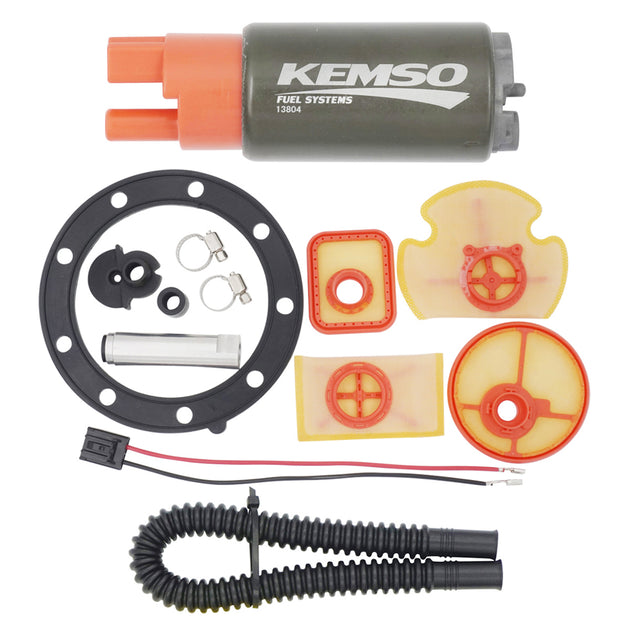 Size compatibility directly affects the feasibility of installation. The fuel tank capacity of a 450cc motorcycle is usually 7-9 liters. The outer diameter of the Fuel Pump assembly needs to be controlled within 35mm (for example, the specification of DENSO 950-010 is Φ32mm×85mm). A common mistake in the aftermarket is the selection of automotive pumps (with a diameter exceeding 42mm), resulting in 23% of users having to modify the fuel tank bracket separately. Voltage compatibility is equally important: Under a 12V DC system, the working current of motor-specific pumps is approximately 2.8-3.5A (automotive pumps are generally above 4.5A), and direct replacement may burn out the wiring harness. The KTM maintenance database shows that the probability of ECU fuses blowing due to incorrect installation of automotive pumps is as high as 67%.
The cost performance needs to be comprehensively evaluated based on the durability cost. The unit price of the original fuel pump is 80-120, and its designed service life is approximately 300 hours (based on an average of 100 hours of off-road cycling per year). Post-sale enhanced types such as Quantum HFF-343 have a unit price of $65, but laboratory accelerated aging tests show that the wear rate of its carbon brushes is 40% faster than that of the original factory. It is worth noting the precision of the fuel filter screen: The original factory is equipped with a 40μm stainless steel filter screen (interception efficiency 99.5%), while inferior substitutes use a 100μm nylon filter screen, which increases the probability of impurities entering by three times. According to statistics from the American Motorcycle Association (AMA), the failure rate of the fuel system for vehicles using uncertified fuel pumps is 2.8 times that of original parts.
Performance stability under extreme working conditions is of vital importance. When the vehicle leaps and lands, the fuel in the fuel tank shakes violently. The fuel inlet of the fuel pump needs to be maintained for 0.3 seconds to restore the fuel supply capacity. Professional competitive models such as the Suter Racing Pump have an internal pressure storage chamber (with a volume of 15ml), which can maintain an oil pressure fluctuation of ≤±0.2Bar in an environment with an acceleration of 1.5G. Data analysis of the 2022 MXGP event shows that the fuel pump with a pressurized design has reduced the probability of engine stalling after high-difficulty jumps from 17% to 1.2%. For non-professional riders, it is recommended to choose the Fuel Pump with an airlock design (such as IAP 101-000), which can still supply fuel normally when tilted at 45°, and its unit price is only 15% higher than that of the basic model.
Size compatibility directly affects the feasibility of installation. The fuel tank capacity of a 450cc motorcycle is usually 7-9 liters. The outer diameter of the Fuel Pump assembly needs to be controlled within 35mm (for example, the specification of DENSO 950-010 is Φ32mm×85mm). A common mistake in the aftermarket is the selection of automotive pumps (with a diameter exceeding 42mm), resulting in 23% of users having to modify the fuel tank bracket separately. Voltage compatibility is equally important: Under a 12V DC system, the working current of motor-specific pumps is approximately 2.8-3.5A (automotive pumps are generally above 4.5A), and direct replacement may burn out the wiring harness. The KTM maintenance database shows that the probability of ECU fuses blowing due to incorrect installation of automotive pumps is as high as 67%.
The cost performance needs to be comprehensively evaluated based on the durability cost. The unit price of the original fuel pump is 80-120, and its designed service life is approximately 300 hours (based on an average of 100 hours of off-road cycling per year). Post-sale enhanced types such as Quantum HFF-343 have a unit price of $65, but laboratory accelerated aging tests show that the wear rate of its carbon brushes is 40% faster than that of the original factory. It is worth noting the precision of the fuel filter screen: The original factory is equipped with a 40μm stainless steel filter screen (interception efficiency 99.5%), while inferior substitutes use a 100μm nylon filter screen, which increases the probability of impurities entering by three times. According to statistics from the American Motorcycle Association (AMA), the failure rate of the fuel system for vehicles using uncertified fuel pumps is 2.8 times that of original parts.
Performance stability under extreme working conditions is of vital importance. When the vehicle leaps and lands, the fuel in the fuel tank shakes violently. The fuel inlet of the fuel pump needs to be maintained for 0.3 seconds to restore the fuel supply capacity. Professional competitive models such as the Suter Racing Pump have an internal pressure storage chamber (with a volume of 15ml), which can maintain an oil pressure fluctuation of ≤±0.2Bar in an environment with an acceleration of 1.5G. Data analysis of the 2022 MXGP event shows that the fuel pump with a pressurized design has reduced the probability of engine stalling after high-difficulty jumps from 17% to 1.2%. For non-professional riders, it is recommended to choose the Fuel Pump with an airlock design (such as IAP 101-000), which can still supply fuel normally when tilted at 45°, and its unit price is only 15% higher than that of the basic model.
Size compatibility directly affects the feasibility of installation. The fuel tank capacity of a 450cc motorcycle is usually 7-9 liters. The outer diameter of the Fuel Pump assembly needs to be controlled within 35mm (for example, the specification of DENSO 950-010 is Φ32mm×85mm). A common mistake in the aftermarket is the selection of automotive pumps (with a diameter exceeding 42mm), resulting in 23% of users having to modify the fuel tank bracket separately. Voltage compatibility is equally important: Under a 12V DC system, the working current of motor-specific pumps is approximately 2.8-3.5A (automotive pumps are generally above 4.5A), and direct replacement may burn out the wiring harness. The KTM maintenance database shows that the probability of ECU fuses blowing due to incorrect installation of automotive pumps is as high as 67%.
The cost performance needs to be comprehensively evaluated based on the durability cost. The unit price of the original fuel pump is 80-120, and its designed service life is approximately 300 hours (based on an average of 100 hours of off-road cycling per year). Post-sale enhanced types such as Quantum HFF-343 have a unit price of $65, but laboratory accelerated aging tests show that the wear rate of its carbon brushes is 40% faster than that of the original factory. It is worth noting the precision of the fuel filter screen: The original factory is equipped with a 40μm stainless steel filter screen (interception efficiency 99.5%), while inferior substitutes use a 100μm nylon filter screen, which increases the probability of impurities entering by three times. According to statistics from the American Motorcycle Association (AMA), the failure rate of the fuel system for vehicles using uncertified fuel pumps is 2.8 times that of original parts.
Performance stability under extreme working conditions is of vital importance. When the vehicle leaps and lands, the fuel in the fuel tank shakes violently. The fuel inlet of the fuel pump needs to be maintained for 0.3 seconds to restore the fuel supply capacity. Professional competitive models such as the Suter Racing Pump have an internal pressure storage chamber (with a volume of 15ml), which can maintain an oil pressure fluctuation of ≤±0.2Bar in an environment with an acceleration of 1.5G. Data analysis of the 2022 MXGP event shows that the fuel pump with a pressurized design has reduced the probability of engine stalling after high-difficulty jumps from 17% to 1.2%. For non-professional riders, it is recommended to choose the Fuel Pump with an airlock design (such as IAP 101-000), which can still supply fuel normally when tilted at 45°, and its unit price is only 15% higher than that of the basic model.